Care Home Fire Alarm Systems –
Care homes and assisted living facilities in York require some of the most carefully designed fire safety systems within the commercial sector. Unlike many workplaces or retail premises, care environments often accommodate vulnerable residents who may have limited mobility, reduced hearing or cognitive impairments that affect evacuation procedures.
Because of this, commercial fire alarm systems within care homes must provide fast, reliable detection while supporting staff in managing safe and controlled evacuations.
Protecting vulnerable occupants requires far more than simply installing smoke detectors throughout a building. Fire alarm systems for care homes need to be designed around the specific operational needs of the premises, the mobility of residents and the evacuation strategy identified within the fire risk assessment.
Many care homes in York operate within converted buildings or properties that have evolved over many years. Extensions, altered room layouts and upgraded facilities can all affect how fire detection systems should operate. Older systems may no longer provide suitable coverage or support modern evacuation procedures effectively.
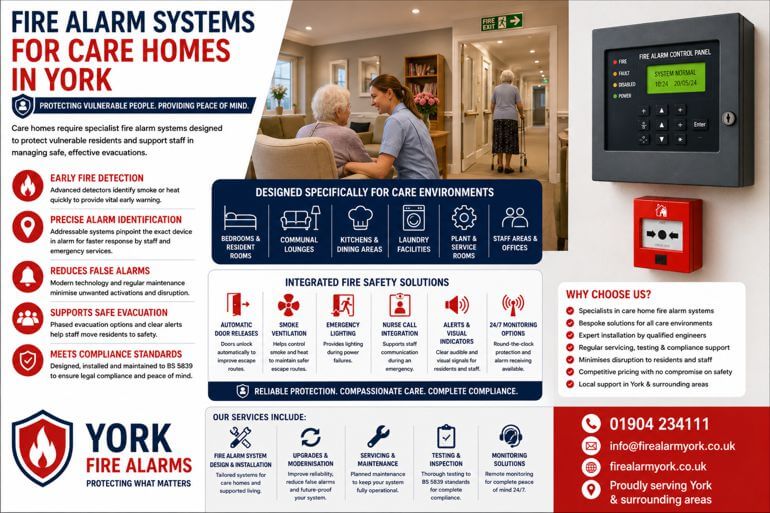
Addressable fire alarm systems are particularly important in care environments because they allow staff to identify the exact detector or device that has activated. In larger buildings containing multiple corridors, bedrooms and communal areas, quickly locating the source of an alarm is essential.
This level of accuracy helps staff respond faster and reduces confusion during emergency situations.
False alarms can be especially problematic within care homes. Unnecessary evacuations can cause distress for residents, disrupt routines and place pressure on care staff. Older systems are often more vulnerable to false activations caused by steam, aerosols, dust or ageing detectors.
Modern detector technology helps minimise these risks while still ensuring rapid response to genuine fire conditions.
Care homes also contain a wide variety of risk areas requiring different types of detection. Kitchens, laundry facilities, plant rooms, medication storage areas and communal lounges all present different fire safety considerations. Specialist detector selection is often required to balance effective detection with day-to-day operational practicality.
For example, heat detectors may be more suitable in certain service areas while optical smoke detectors provide more appropriate protection in bedrooms and circulation spaces.
Many care homes operate phased or progressive horizontal evacuation strategies rather than full simultaneous evacuation. This means fire alarm systems must support staged movement of residents into safer compartments within the building while staff assess the situation.
Modern commercial fire alarm systems can be configured to support these more complex evacuation procedures effectively.
Integration with wider building safety systems is also important in care environments. Fire alarms may operate alongside automatic door releases, smoke ventilation systems, nurse call systems and emergency lighting to support safer evacuation and improved resident protection.
Clear audible alarms combined with visual indicators can also help improve awareness for both staff and residents.
Out-of-hours fire protection is another key consideration. Care homes operate continuously, meaning systems must remain reliable 24 hours a day without interruption. Monitored fire alarm systems provide additional reassurance by ensuring alarm activations and critical faults are immediately reported if required.
Routine maintenance and testing are essential for maintaining compliance and system reliability. Under BS 5839 recommendations, commercial fire alarm systems should be regularly inspected, tested and serviced to ensure all components remain fully operational.
Battery backup systems are particularly important within care homes because fire alarm protection must continue during mains power failures.
Commercial insurers and regulatory bodies also expect care facilities to maintain properly documented fire safety procedures and maintenance records. Detailed service reports, weekly testing logs and fault records all help demonstrate that fire alarm systems are being professionally managed and maintained.
As care standards continue evolving throughout York and North Yorkshire, many care providers are investing in modern fire alarm infrastructure to improve resident safety, reduce operational risk and support compliance requirements.
Businesses searching for Fire Alarms York services are increasingly looking for specialist commercial expertise tailored specifically to healthcare and care home environments.
A professionally designed and maintained fire alarm system helps staff respond more effectively, supports safer evacuation procedures and provides greater reassurance for residents, families and care providers alike.
Whether protecting residential care homes, assisted living facilities or specialist care environments, reliable commercial fire alarm systems remain one of the most important safety investments any care provider can make.