Fire Alarm Interfaces –
Modern commercial fire alarm systems do far more than simply sound an alarm when a detector activates.
Across York, many commercial buildings rely upon fire alarm systems that are integrated with numerous other life safety and building management systems. These integrations help control how a building responds during an emergency and can play a crucial role in protecting occupants, limiting fire spread and supporting evacuation procedures.
At the centre of many of these functions are interface units.
Whilst rarely seen by building occupants, interfaces are often responsible for controlling some of the most important actions that occur when a fire alarm activates.
Understanding how interfaces work helps businesses appreciate the wider role their fire alarm system performs every day.
What Is a Fire Alarm Interface?
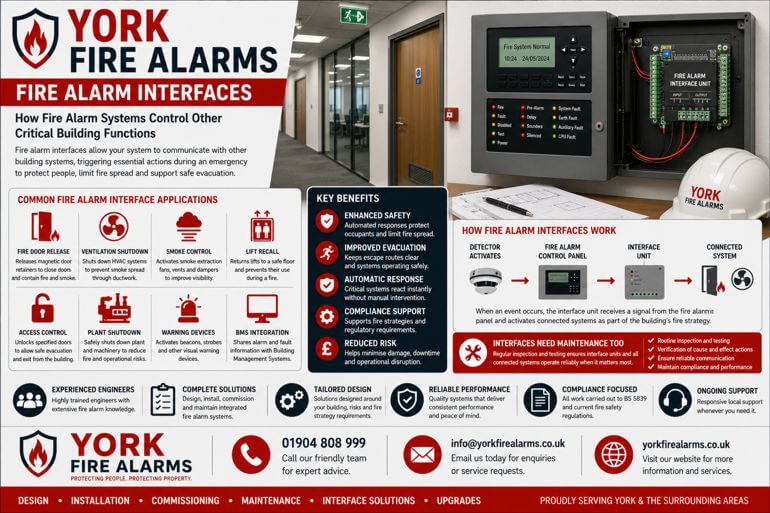
A fire alarm interface is a device that allows the fire alarm system to communicate with other electrical or mechanical systems within a building.
When a specific event occurs, such as a detector activation or evacuation signal, the interface can trigger a predefined action.
Examples include:
• Releasing fire doors
• Shutting down ventilation systems
• Activating smoke control equipment
• Recalling lifts
• Releasing access control doors
• Triggering plant shutdown systems
• Activating warning beacons
These actions form part of the building’s overall fire strategy.
Why Interfaces Are Important
During a fire, controlling the building environment can be just as important as sounding the alarm itself.
Interfaces help ensure that critical systems react automatically and consistently.
Benefits include:
• Improved occupant safety
• Reduced smoke spread
• Enhanced evacuation routes
• Better compartmentation
• Faster emergency response
• Greater control of fire risks
Without interfaces, many of these functions would require manual intervention, potentially delaying the response.
Fire Door Release Systems
One of the most common applications involves magnetic fire door retainers.
Many commercial premises keep fire doors open during normal operation for convenience and accessibility.
When the fire alarm activates, interface units release the retainers, allowing fire doors to close automatically.
This helps contain smoke and fire within designated compartments.
Smoke Control Integration
Smoke presents a significant threat during many fire incidents.
Interface units can activate smoke control systems designed to:
• Extract smoke
• Open automatic vents
• Improve visibility
• Protect escape routes
• Reduce smoke migration
These systems often form a critical part of larger commercial building fire strategies.
Access Control Integration
Modern buildings frequently use electronic access control systems.
During an emergency, certain doors may need to unlock automatically to support evacuation.
Fire alarm interfaces can release designated doors whilst maintaining the security arrangements required by the fire strategy.
This helps occupants leave the building safely without encountering locked escape routes.
Lift Control Functions
Passenger lifts should generally not be used during a fire.
Interface units can instruct lifts to return to a predetermined floor and become unavailable for normal use.
This helps reduce risks associated with lift use during emergency situations.
Supporting Cause and Effect Programming
Interfaces are often incorporated within cause and effect programming.
This allows specific events to trigger specific actions.
For example:
• Detector activation in a plant room may shut down equipment.
• Smoke detection within an atrium may activate smoke extraction.
• Activation in one area may release selected fire doors.
This targeted approach creates a more intelligent emergency response.
The Importance of Maintenance
Like any other component, interface units require regular inspection and testing.
Routine maintenance helps ensure:
• Correct operation
• Reliable communication
• Continued compliance
• Effective integration with connected systems
Testing should form part of the overall fire alarm maintenance programme.
Failing interfaces may not become apparent until they are required during an emergency.
Professional Design Is Essential
Because interfaces control other building systems, correct design is critical.
Engineers must consider:
• Fire strategy requirements
• Building layout
• Occupancy levels
• Connected equipment
• Cause and effect requirements
Poorly designed integrations can create unnecessary complexity and operational issues.
A properly designed system ensures all connected functions operate as intended.
Commercial Fire Alarm Services in York
At Fire Alarm York, we design, install, maintain and upgrade commercial fire alarm systems throughout York and the surrounding areas.
Our experienced engineers can assess interface requirements, develop cause and effect strategies and ensure your fire alarm system integrates effectively with other critical building systems.
Whether you operate offices, warehouses, healthcare facilities, schools or commercial premises, we can help deliver reliable fire alarm solutions that provide enhanced safety, compliance and operational performance.