
Fire Alarm Electrical Shutdown Planning –
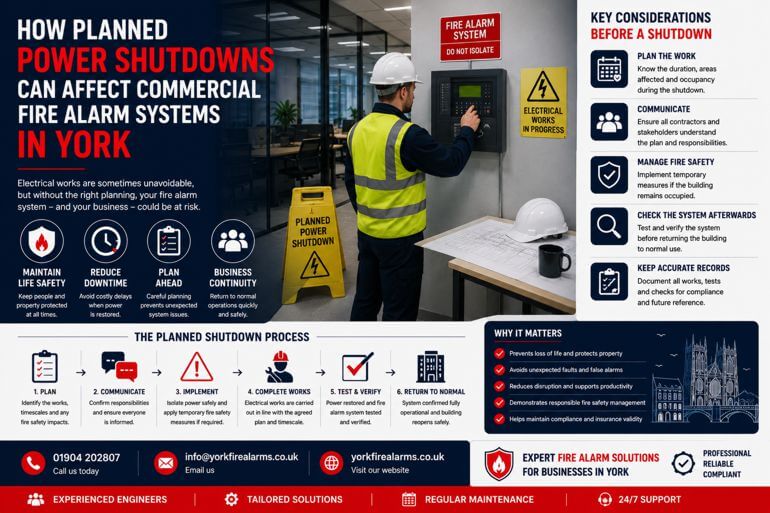
Most businesses experience planned electrical shutdowns at some point. Whether carrying out switchboard upgrades, installing new equipment, replacing distribution boards or completing refurbishment work, isolating the electrical supply is often unavoidable.
What is frequently overlooked, however, is the effect these planned outages can have on a commercial fire alarm system.
For businesses across York, understanding how fire alarm systems should be managed before, during and after a planned power shutdown helps maintain life safety, reduce unnecessary disruption and ensure the building is ready to return to normal operation.
Fire Alarm Systems Need Careful Planning
Commercial fire alarm systems are designed to remain operational around the clock. Although standby batteries provide temporary backup, they should never be relied upon as a substitute for proper planning during extended electrical work.
Before any shutdown takes place, building managers should understand:
- How long the isolation will last.
- Which parts of the building are affected.
- Whether the premises will remain occupied.
- If contractors will continue working.
- Whether temporary fire safety measures are required.
Early planning helps prevent unexpected issues on the day of the work.
Communication Is Essential
Planned shutdowns often involve several contractors working together.
Electrical contractors, facilities managers, maintenance teams and fire alarm engineers should all understand the sequence of work so the fire alarm system can be managed correctly throughout the project.
Clear communication reduces delays and helps avoid unnecessary call-outs once power is restored.
Checking the System Afterwards
Once electrical work has been completed, the fire alarm system should be checked before normal occupation resumes.
Typical post-shutdown checks include:
- Confirming the control panel has restarted correctly.
- Verifying there are no fault conditions.
- Checking communication with field devices.
- Testing selected detectors and manual call points.
- Confirming sounders operate correctly.
- Recording the work completed.
These simple checks help identify issues before they affect normal business operations.
Protecting Business Continuity
Unexpected faults discovered after a power restoration can delay reopening, disrupt production or prevent staff from returning to work.
Including the fire alarm system within the shutdown plan reduces these risks and helps businesses resume normal operations more quickly.
For organisations operating warehouses, offices, healthcare facilities or manufacturing sites, this planning can prevent unnecessary downtime.
Maintaining Accurate Records
Every planned shutdown should be documented.
Recording dates, work undertaken, system checks and any follow-up actions creates a clear maintenance history that supports future servicing and demonstrates good fire safety management.
Accurate records also help identify recurring issues if similar work is undertaken again.
Working With Experienced Fire Alarm Engineers
No two commercial buildings are the same.
Older premises, multi-building sites and complex commercial facilities may all require different approaches during planned electrical works.
Professional advice before the shutdown helps ensure the fire alarm system remains protected throughout the project and returns to full operation without unnecessary delay.
Supporting Businesses Across York
Electrical improvements are an important part of maintaining commercial buildings in York, but they should never compromise fire safety.
By including the fire alarm system within project planning, businesses can reduce operational risk, protect employees and return to normal trading with confidence.
Whether your premises are undergoing routine maintenance or a major electrical upgrade, careful planning helps ensure your fire alarm system continues providing dependable protection when it matters most.