Fire Alarm Device Labelling –
Walk into almost any commercial building and you’ll find dozens, sometimes hundreds, of fire alarm devices installed throughout the premises. Smoke detectors, heat detectors, manual call points, sounders and interfaces all play an important role in protecting the building.
What isn’t always obvious is how much easier those devices are to maintain when they are clearly identified and accurately documented.
Good device labelling is often overlooked because it doesn’t directly improve fire detection. However, it can significantly reduce the time required to investigate faults, carry out routine servicing and plan future alterations.
For businesses throughout York, properly identifying fire alarm devices can improve maintenance efficiency whilst helping engineers and facilities teams manage the system more effectively.
What Is Fire Alarm Device Labelling?
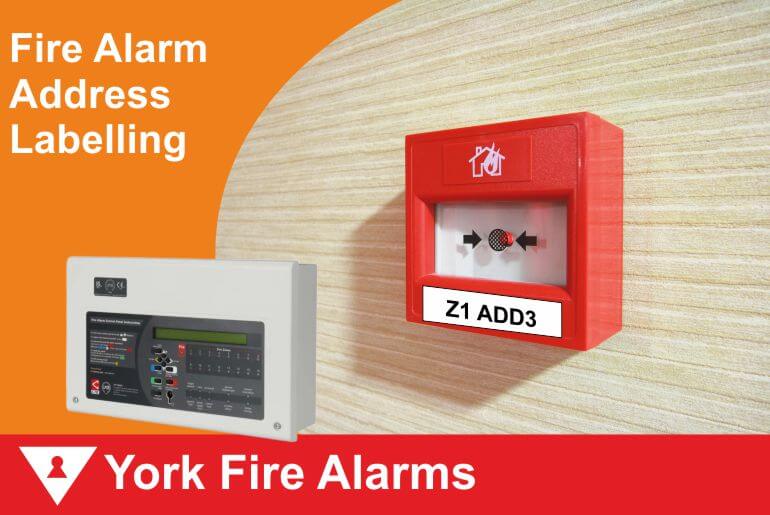
Every addressable fire alarm device has a unique electronic address, but this isn’t always enough when engineers are working on site.
Clear physical labelling allows individual devices to be identified quickly without unnecessary investigation.
Typical labels may identify:
- Detector numbers.
- Manual call point references.
- Sounder locations.
- Interface modules.
- Control equipment.
- Zone references.
- Plant connections.
- Remote indicators.
When these identifiers correspond with system documentation, maintenance becomes considerably more straightforward.
Faster Fault Finding
If a fire alarm panel reports a fault on a specific detector, engineers need to locate that device as efficiently as possible.
Where equipment has been properly labelled, valuable time isn’t wasted searching multiple rooms or ceiling voids trying to identify the correct detector.
This allows faults to be investigated more quickly and helps reduce disruption for building occupants.
Supporting Building Changes
Commercial premises rarely remain unchanged.
Departments relocate, offices expand, production lines move and meeting rooms are created or removed.
Accurate device identification makes it easier to understand how the existing fire alarm system is arranged before refurbishment work begins.
It also helps contractors avoid accidental damage when carrying out building alterations.
Better Maintenance Records
Routine servicing generates valuable information over the lifetime of a fire alarm system.
When every device can be identified consistently, maintenance reports become clearer and more useful.
Facilities managers can easily see:
- Which devices have required attention.
- Areas experiencing repeated faults.
- Components that have been replaced.
- Maintenance trends over time.
- Equipment approaching the end of its service life.
- Areas affected by previous refurbishment work.
- Outstanding recommendations.
- Future upgrade priorities.
This creates a much more meaningful maintenance history for the building.
Helping New Facilities Teams
People responsible for commercial buildings often change over time.
Whether a new facilities manager joins the organisation or responsibility transfers to a managing agent, clearly labelled fire alarm equipment makes it easier for incoming personnel to understand the installation.
This reduces the learning curve and supports more effective management from the outset.
A Small Detail With Long-Term Benefits
Device labelling is rarely the most noticeable feature of a fire alarm installation, yet it contributes to the efficiency of the system throughout its entire lifespan.
Combined with accurate drawings and maintenance records, it allows servicing, alterations and fault investigations to be completed more efficiently while reducing unnecessary delays.
Commercial Fire Alarm Maintenance in York
Maintaining a commercial fire alarm system isn’t only about replacing components or carrying out routine inspections.
Clear identification of every device helps engineers work more efficiently, improves maintenance records and supports future building alterations.
For businesses across York, investing time in accurate fire alarm documentation and device labelling can deliver long-term operational benefits whilst helping keep critical life safety systems organised and easy to manage.