Fire Alarm Zone Charts –
Many commercial buildings in York have modern fire alarm systems installed but overlook one critical supporting component — the fire alarm zone chart. While often treated as a simple compliance requirement, a properly designed zone chart plays an important role in helping staff and emergency services respond quickly during a fire alarm activation.
Without clear zone information, even advanced fire alarm systems can create confusion during emergencies, particularly in larger or more complex buildings.
What Is a Fire Alarm Zone Chart?
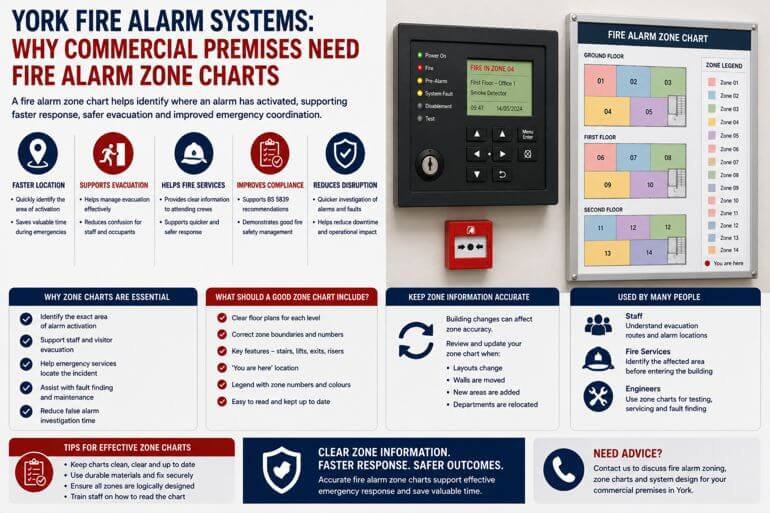
A fire alarm zone chart is a visual plan showing how a building has been divided into fire alarm zones.
It helps identify:
- where an alarm activation has occurred
- which areas are affected
- and how the building layout is organised
Zone charts are typically positioned adjacent to the fire alarm control panel so they can be viewed immediately during an incident.
Larger Buildings Need Clear Location Information
In smaller buildings, locating the source of an alarm may be relatively simple. However, in larger commercial premises such as:
- offices
- schools
- warehouses
- hotels
- healthcare environments
- and industrial units
finding the activated device can take valuable time without clear zoning information.
Zone charts help responders quickly understand:
- floor layouts
- compartment areas
- stair locations
- and zone boundaries
Faster Identification Supports Safer Response
When an alarm activates, staff and emergency services need to identify the affected area as quickly as possible.
Accurate zone charts help:
- speed up investigation
- support evacuation management
- reduce confusion
- and improve emergency coordination
Early identification may also help reduce:
- fire spread
- smoke damage
- and operational disruption
Firefighters Rely on Accurate Zone Information
Attending fire crews frequently use:
- the fire alarm panel
- zone indicators
- and the zone chart
to understand where activation has occurred before entering the building.
Poorly designed or outdated charts can delay:
- search procedures
- fire investigation
- and emergency response actions
Zone Charts Must Match the Building Layout
One of the most common problems found in York commercial premises is inaccurate or outdated zone information.
Changes such as:
- partition walls
- office reconfiguration
- extensions
- mezzanine floors
- or departmental changes
can all affect the accuracy of the zone layout.
Whenever significant building alterations occur, the zone chart should be reviewed and updated accordingly.
Clear Labelling Is Essential
Effective zone charts should be:
- easy to read
- logically organised
- correctly labelled
- and simple to understand under pressure
Overly complicated diagrams or unclear terminology can create confusion during emergencies.
Zone Boundaries Should Reflect Building Risks
Fire alarm zones should not be divided randomly.
Good zoning considers:
- escape routes
- fire compartments
- occupancy type
- floor structure
- and operational activities
Proper zoning makes the chart more useful during both alarms and maintenance procedures.
Maintenance and Testing Depend on Accurate Charts
Engineers and responsible persons often use zone charts during:
- routine servicing
- weekly testing
- fault investigation
- and system modifications
Accurate charts help ensure:
- devices are identified correctly
- testing is carried out efficiently
- and faults are traced more quickly
False Alarms Become Easier to Investigate
Zone charts also help staff investigate unwanted activations more efficiently.
This is especially useful in buildings containing:
- kitchens
- dusty environments
- workshops
- or changing occupancy conditions
Quick identification reduces unnecessary disruption and improves fault management.
Staff Should Understand Basic Zone Information
Responsible persons should know:
- how to read the zone chart
- how zones correspond with the panel
- and how to communicate alarm locations clearly
Basic awareness training significantly improves emergency coordination.
Zone Charts Support Compliance
Commercial fire alarm systems designed to BS 5839 recommendations should normally include suitable zone information where applicable.
Maintaining accurate charts helps support:
- compliance
- fire risk management
- and emergency preparedness
Small Details Can Make a Big Difference
For businesses in York, fire alarm zone charts may appear simple, but they play a vital role in helping fire alarm systems operate effectively during emergencies.
Clear and accurate zone information helps provide:
- faster response
- improved evacuation
- safer investigation
- and better emergency coordination
In larger commercial buildings, these small details can make a significant difference when every second matters.
Frequently Asked Questions
What does a fire alarm zone chart show?
It shows how a building is divided into alarm zones and helps identify where activations occur.
Where should a zone chart be located?
Zone charts are normally positioned adjacent to the fire alarm control panel.
Should zone charts be updated after building changes?
Yes. Any significant layout changes should trigger a review of the zone chart and zoning arrangement.