
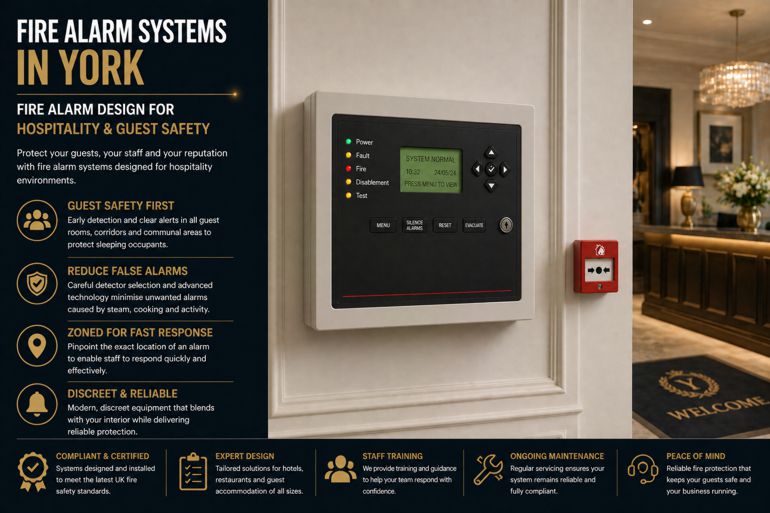
York has a high concentration of hotels, guest houses, restaurants and hospitality venues, many of which operate in older or multi-use buildings. Fire alarm system design in these environments must go beyond basic compliance. It must balance guest safety, minimal disruption and operational practicality, all while meeting strict regulatory requirements.
One of the biggest challenges in hospitality settings is protecting sleeping occupants. Unlike offices or retail spaces, guests may be unfamiliar with the building layout and slower to respond in an emergency. This means that fire alarm systems must provide early detection and clear, reliable alerts throughout the premises.
Coverage is critical. All guest rooms, corridors, stairwells and communal areas must be protected, with detection tailored to each environment. In York hotels and guest houses, this often involves a combination of smoke and heat detectors, positioned to ensure effective coverage without causing unnecessary activations.
False alarms are a significant concern in hospitality environments. Frequent unwanted activations can disrupt guests, damage reputation and even lead to loss of business. In many cases, false alarms are caused by steam from bathrooms, cooking fumes or environmental factors.
To address this, systems must be designed with careful detector selection and positioning. For example, heat detectors may be used in kitchens, while smoke detection in bedrooms must account for factors such as en-suite facilities. Modern multi-sensor detectors can also help distinguish between genuine fire conditions and everyday activities.
Zoning plays an important role in larger hospitality venues. By dividing the building into defined areas, staff can quickly identify the location of an alarm and respond accordingly. In York hotels with multiple floors or wings, this improves response times and reduces unnecessary disruption.
Phased evacuation may also be relevant in larger premises. Rather than evacuating the entire building immediately, alarms can be triggered in specific areas first, allowing for a more controlled response. This must be carefully planned and supported by the fire alarm system.
Clear communication is essential. Guests may not be familiar with alarm tones or procedures, so systems must provide consistent and easily recognisable alerts. In some cases, voice alarm systems may be used to provide instructions during an incident.
Integration with other systems can enhance safety. Fire alarms can be linked with access control systems to release doors, or with building systems to manage ventilation and reduce the spread of smoke.
Staff training is critical in hospitality settings. Employees must understand how to respond to alarms, assist guests and manage evacuation procedures. A well-trained team can significantly improve safety outcomes.
Maintenance is particularly important due to the high usage of these environments. Regular servicing ensures that detectors remain clean and effective, reducing the likelihood of false alarms and ensuring reliable operation.
Discretion is also a consideration, particularly in high-end venues. Equipment must be installed in a way that is effective but does not detract from the guest experience. Modern systems offer more discreet options to support this.
Compliance is non-negotiable. Fire alarm systems in York hospitality premises must meet relevant standards and be supported by appropriate documentation, including testing and maintenance records.
As buildings are refurbished or repurposed, fire alarm systems must be reviewed and updated accordingly. Changes in layout or use can significantly affect fire risk and system requirements.
For hospitality businesses in York, fire alarm systems must deliver more than basic protection. They must provide early detection, reliable performance and minimal disruption, ensuring that guests remain safe while maintaining the reputation and operation of the business.
Ultimately, the right system is one that protects people effectively while allowing the business to operate smoothly — a balance that requires careful design, installation and ongoing management.